

1000 Vin Scully Avenue
Los Angeles, CA 90012
Phone: 866-363-4377
Website: mlb.com
Instagram: @dodgerstadium
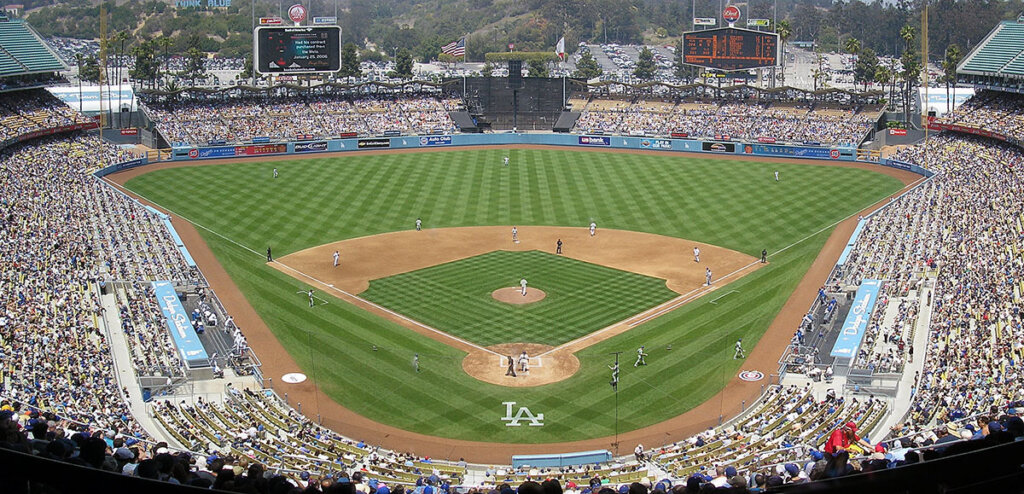
Dodger Stadium is home to the nine-time World Series champion Los Angeles Dodgers –– and one of L.A.’s true landmarks.
Opened in 1962 and located just 18 miles from downtown Santa Monica, it remains one of the most scenic and recognizable venues in baseball. It’s the third-oldest active stadium in Major League Baseball and the oldest on the West Coast –– a place where baseball history and Southern California style still meet in a way few venues can match.
The pastel seats, wavy pavilion roofs and dramatic views toward downtown Los Angeles help give the stadium a look that feels both timeless and unmistakably local. Even after major renovations, Dodger Stadium has held onto its mid-century personality while adding the kinds of upgrades modern fans expect. It remains one of the rare venues that still feels big, historic and genuinely special the moment you arrive.
History
- Dodger Stadium opened on April 10, 1962. The Dodgers played their first Los Angeles seasons at the Coliseum.
- The project was championed by Brooklyn Dodgers owner Walter O’Malley and became the first privately financed ballpark built since Yankee Stadium.
- It remains the oldest MLB stadium west of the Mississippi River and one of the oldest active parks in the league.
- The stadium underwent a major renovation in 2012 – 2013 adding or improving clubhouses, restrooms, concessions, sound, batting cages and fan areas.
What Makes It Special
- The stadium is literally carved into Chavez Ravine, which gives it its famous terraced parking layout and panoramic views.
- It was one of the last great baseball-only stadiums built before the multi-purpose era took over.
- Signature design elements include the pastel seating bowl, wavy outfield roofs and the elevator tower behind home plate.
- Few venues balance old-school charm and big-game atmosphere as well as Dodger Stadium.

Iconic Moments
1965: Sandy Koufax throws a perfect game –– one of the most legendary pitching performances in baseball history.
1980: Dodger Stadium hosts the MLB All-Star Game.
1981: “Fernandomania” sweeps Los Angeles as Fernando Valenzuela becomes a sensation and helps turn Dodger Stadium into the center of the baseball world.
1984: Dodger Stadium hosts Olympic baseball during the Summer Games in Los Angeles.
1984: Michael Jackson performs the final show of the Jacksons’ Victory Tour at Dodger Stadium, ending a six-show sold-out run and marking the last time all the Jackson brothers performed together on tour.
1988: Kirk Gibson’s dramatic walk-off home run in Game 1 of the World Series becomes one of the most iconic moments in baseball history.
2009: Dodger Stadium hosts the World Baseball Classic final, bringing one of the sport’s top international events to Los Angeles.
Over the decades: The stadium has also hosted a Mass celebrated by Pope John Paul II, along with concerts by major artists including The Beatles, Billy Joel and U2.
Parking Information
- General parking for cars for most games is $40 in advance and $45 at the gate, with no in-and-out privileges and no refunds.
- Oversized vehicles are $65 in advance and $70 at the gate.
- Parking gates open 2.5 hours before game time, while stadium gates open 2 hours before first pitch.
- General admission parking may direct you to different lots depending on arrival time, traffic flow and event conditions.
- Tailgating and alcohol consumption are prohibited in all parking lots, and the speed limit in the lots is 14 mph.
Driving Directions
From Downtown: Take the 110 Freeway Northbound, exit at Dodger Stadium, then continue straight toward Gate E.
From the Westside: Take the 10 East to the 110 North, then use the Dodger Stadium exit and approach through Gate E.
From the Valley: Take the 5 South to CA-2 West/Glendale Boulevard, continue toward Sunset Boulevard and Vin Scully Avenue, then enter through Gate A.
All major freeways can be reached from any parking gate exit after the game.
Shuttles and Transportation
- The Dodger Stadium Express is free. From Union Station, buses run about every 10 minutes starting 2.5 hours before game time and drop fans near the Centerfield gates.
- There is also a South Bay route serving stations including Slauson, Manchester, Harbor Freeway, Rosecrans and Harbor Gateway Transit Center.
- You can also reach the stadium area by Metro: Line 4 stops near Vin Scully Avenue and Sunset Boulevard, and the A Line to Chinatown Station leaves about a 1.2-mile uphill walk to the ballpark.
Seating Chart
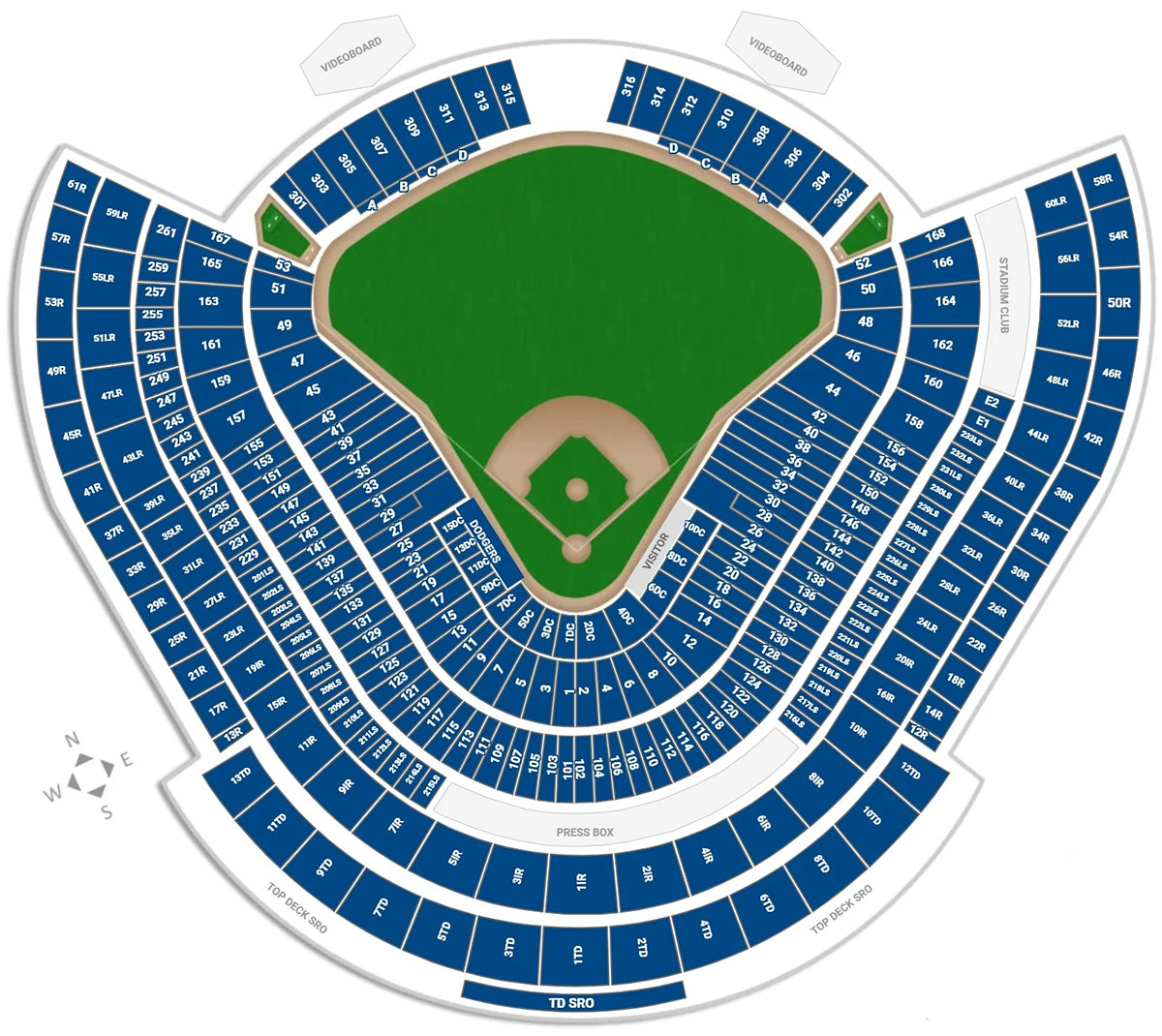
Click image to enlarge
Know Before You Go
- Dodger Stadium has a clear bag policy: clear bags up to 12″ x 12″ x 6″ are allowed, along with small non-clear clutches up to 5″ x 8″ x 2″.Medical bags and diaper bags accompanying infants are allowed, but backpacks, large purses, coolers and oversized bags are not.
- The stadium does not offer a public bag check for prohibited items, so bring only what you can carry inside legally.
- For guests needing mobility help from the parking lots, the Dodgers offer a courtesy shuttle that can be requested by calling the Dodger Hotline at 323-224-2611 after parking.
- If you want to skip traffic altogether, Union Station plus the free Dodger Stadium Express is often one of the easiest ways to get to the game.
👉 Explore more sports & entertainment venues 👈
This page is maintained by the Santa Monica Sun Sports Desk. Last updated: June 26, 2026. Have an update, correction or missing information to add? Contact us at sports@santamonicasun.com.