

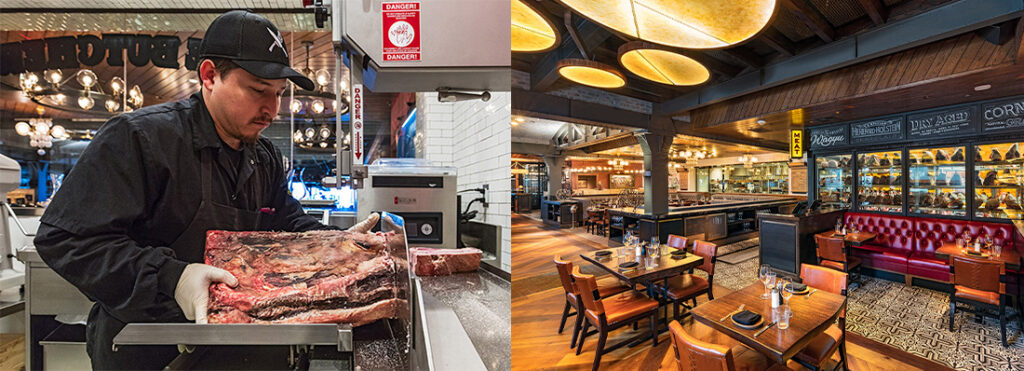
Master butcher Noah Esquivel oversees the preparation of more than 10k pounds of beef at Meat on Ocean. In our exclusive interview, he shares 5 simple rules to stop ruining your next steak at home.
At Meat On Ocean, dinner comes with a show—and the show comes with a cleaver.
Behind a six-foot glass wall in the Ocean Avenue steakhouse, master butcher Noah Esquivel and his team break down massive cuts of beef with surgical precision. Diners can watch their future dinner go from hulking subprimals to neatly trimmed filet or New York strip while they contemplate ordering another martini.
“Guests can even request custom cuts,” Esquivel tells The Sun. “If someone wants a 50-ounce custom roast for the table, I can cut it to order right then and there.”



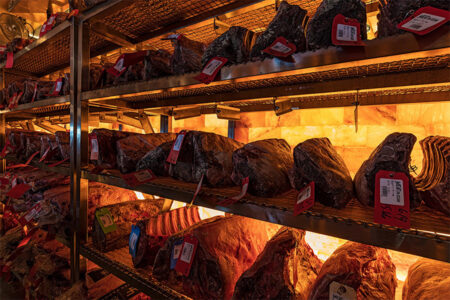
Opened in 2017, Meat On Ocean offers open-air dining with a clear view of the Pacific Ocean. But its most striking visual may be the glass-enclosed, on-site dry-aging room, which holds about 10,000 pounds of beef. The meat operation is part of the restaurant’s identity: visible, theatrical and just a little primal.
“You don’t see that every day,” Esquivel says.
For the past eight years, Esquivel has been the man behind the glass, overseeing the trimming and sale of more than 1,000 pounds of steak, chicken and chops every week. He calls his work a craft, not a back-of-house chore. And he has a fairly direct explanation for what sets his restaurant’s beef apart.
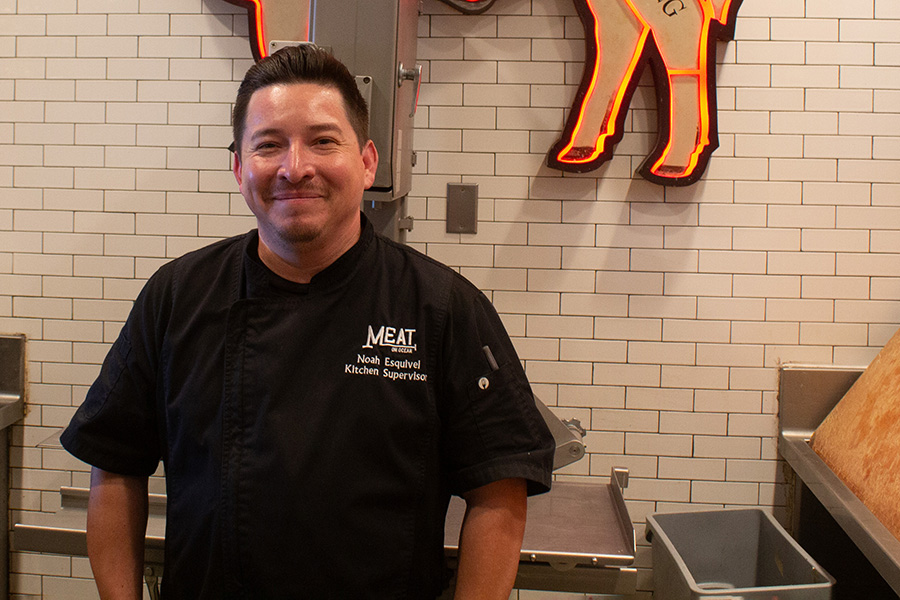
The “Happy Cow” Secret
“Happy, low-stress cows yield better, more tender meat,” Esquivel says.
Turns out, the road to a delicious T-bone starts long before the grill is fired up.
The restaurant’s cattle are raised on pasture in the Pacific Northwest, where supplier Double R Ranch uses a process called “regenerative farming” across roughly 100,000 acres. The cattle graze naturally as fences are moved along the range before being grain-finished.
“High stress creates tense, tough meat,” Esquivel insists.

20 Years Behind the Knife
And he would know. Esquivel has spent 20 years working with beef, beginning as a teenage bagger at Bristol Farms before moving into the grocery chain’s meat department at age 18. He later sharpened his skills at a high-volume processing facility, where the work was measured less in individual ribeyes than sheer tonnage: 2,000 to 3,000 pounds of steak cut each day, along with roughly 10,000 pounds of ground beef.
But much of the butcher’s education came after the customers had gone home.
“I was really self-taught,” he says. “At night, I would grab a cut, try my best to do it and put whatever was usable in the display case. Whatever wasn’t went into the ground beef section.”
Now, he leads a three-person meat-cutting team where the job does not end when the knife goes down. Esquivel checks steak presentation and watches how different cuts cook, because a steak that is unevenly trimmed or misshaped can cook at different speeds.
That matters, he says, because the person behind the grill can make or break even the most expensive piece of beef.
“A trained cook can make any steak taste good,” Esquivel says. “A bad cook can ruin an A5 Wagyu.”


5 ways to keep from murdering your next steak at home
 1. Get the pan screaming hot
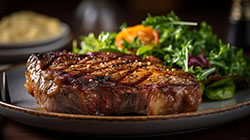
The biggest mistake home cooks make is missing the heat.
“You want high heat to get that crust while preserving the inside,” he says.
The goal is a fast, dark sear without driving the center of the steak past its ideal doneness. A weak pan will not give you a proper crust; it will leave you with gray meat, lost juices and the creeping realization that you should have ordered takeout.
“A cast-iron pan works great,” Esquivel says.
2. Keep an eye on doneness
Steak does not care how expensive it was at the butcher shop. Leave it on the heat too long and it can still become an overpriced hockey puck.
“People often overcook it,” Esquivel says.
Over time, he says, cooks learn to judge doneness by touch. Until then, a meat thermometer is not cheating. It is insurance.
The USDA recommends cooking whole cuts of beef, including steaks, to 145°F, then resting them at least three minutes before eating.
3. Skip the countertop ritual
A lot of people let a steak sit out until it reaches room temperature before cooking. Esquivel does not see the need.
“In my experience, putting it down chilled right from the refrigerator prevents the heat from over-penetrating too fast,” he says.
His advice is to put it on chilled and control the cook with high heat, attention and timing. Less time sitting on the counter, less time wondering whether dinner has become a science experiment.
4. Give the steak a break
The steak may look ready, smell ready and be screaming to get sliced. Ignore it.
“Resting time is huge,” Esquivel says. “A high-heat sear gives you the crust, but resting allows the internal temperature to rise evenly to your target doneness.”
That short wait helps the internal temperature settle and keeps more juice in the meat instead of running all over the cutting board. The USDA’s minimum rest guidance is three minutes; a thicker steak may need longer.
5. Don’t bury a good steak
Esquivel’s restaurant method is not complicated.
“When you have quality meat, you don’t need much—just salt, pepper and beef tallow over live fire,” he says.
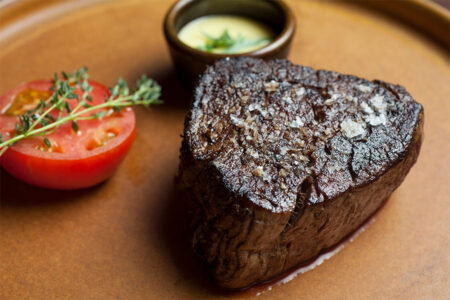
At Meat On Ocean, steaks are seared, then finished with steak butter. The at-home message is simpler: salt the steak, use high heat and resist the urge to cover a good cut with a sugary marinade, 10 competing seasonings or enough bottled sauce to disguise a misdemeanor.
A prime steak has more marbling than a choice steak, Esquivel explains, while Wagyu and A5 Wagyu push the fat content even higher. But the right choice comes down to taste: ribeye lovers want more fat; New York strip fans often prefer a firmer bite.

- Giant sinkhole threatens $10M home belonging to Nicolas Cage - September 8, 2026
- Inside Meat on Ocean: Santa Monica’s Most Unique Steakhouse - September 8, 2026
- Miley takes the Hollywood Bowl in October – here’s how to score tickets - September 6, 2026