

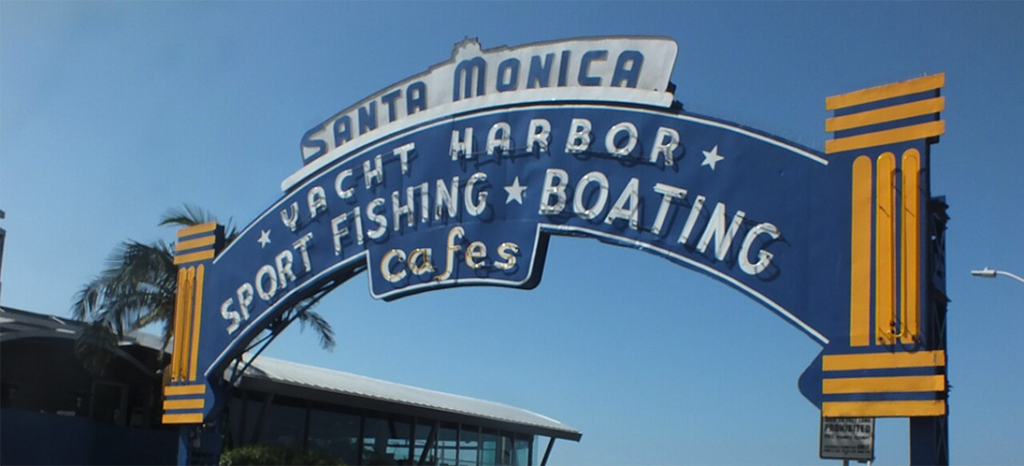
Local students could have helped restore California history while taxpayers benefited from a community-driven alternative to corporate contracting.
The City of Santa Monica is preparing to send its historic Pier entrance sign hundreds of miles to Las Vegas for restoration, raising questions about taxpayer spending and a potentially extraordinary missed opportunity for local students and the community.
On October 19, 2026, the city announced that YESCO, a private sign company, would oversee the removal, restoration, and storage of the iconic 1941 landmark at its Nevada facility.
The restoration is associated with the larger Santa Monica Pier Bridge Replacement Project, for which the City Council approved an approximately $35.6 million construction contract, including contingency funding, in September 2025.
That amount covers the broader bridge construction project, not the sign alone. The complete cost of removing, transporting, restoring, storing, and reinstalling the sign has not yet been publicly established through the records reviewed.
But what if Santa Monica had taken an entirely different approach—one that could have created huge taxpayer savings while investing directly in its own students and community?
A Historic Landmark Could Have Become a Community Classroom
Instead of transporting the sign to Nevada, Santa Monica could have explored establishing a temporary restoration facility within the greater Los Angeles area.
Local high schools, community colleges, vocational institutions, and apprenticeship programs could have partnered with experienced tradespeople and historic preservation professionals.
Students studying electrical technology, welding, metal fabrication, painting, engineering, and historic preservation could have gained invaluable hands-on experience while helping restore one of California’s most recognizable landmarks.
Institutions such as Santa Monica College and Los Angeles Trade-Technical College already provide educational programs involving relevant technical disciplines.
Imagine students completing their education knowing they helped restore a landmark visited and photographed by millions of people.
They could have gained professional mentorship, practical experience, career connections, and a lasting sense of community pride.
Years later, those students could have returned to the Pier with their families and proudly declared, “I helped restore that.”

Huge Taxpayer Savings Instead of Corporate Profits?
A community-based restoration initiative could also have offered substantial financial advantages.
Rather than shipping the sign to Nevada, Santa Monica could have explored local restoration and storage facilities, eliminating or reducing certain transportation expenses.
Local businesses could have contributed materials, equipment, sponsorships, and professional expertise.
Educational partnerships and properly organized volunteer programs could have provided additional resources while giving students meaningful experience.
The city could have pursued two major objectives with the same public investment: restoring an iconic landmark and helping educate the next generation of skilled American workers.
The exact savings cannot yet be calculated because the sign-specific restoration costs have not been fully established, and no comparative community-project estimate is available.
Nevertheless, the opportunity to pursue huge taxpayer savings while strengthening local education deserves serious consideration.
Notably, YESCO itself maintains operations in Southern California, making the decision to utilize its Las Vegas facility another legitimate subject for public examination.

Was the Community Given a Voice?
Santa Monica conducted public outreach concerning the broader bridge replacement project, including an October 2022 hearing where the sign’s relocation was discussed.
However, publicly available documentation reviewed to date has not established that residents, educators, students, or local organizations were invited to consider a community-based restoration alternative.
Shouldn’t residents have had an opportunity to explore ways of preserving their own landmark while directly benefiting their schools, students, businesses, and taxpayers?
Public Records Request Submitted
A comprehensive California Public Records Act request has been submitted to the City of Santa Monica seeking documentation concerning:
- Who selected and approved YESCO and the Las Vegas facility.
- Whether California-based contractors and restoration alternatives were considered.
- The complete costs of disassembly, transportation, restoration, storage, and reinstallation.
- Contracts, subcontractor payments, competitive bids, and financial comparisons.
- The public officials responsible for approving the arrangements.
- Relevant financial disclosures, potential conflicts of interest, and applicable procurement requirements.
- Public participation, restoration planning, and project oversight.
The request seeks the underlying documents showing how these taxpayer-funded decisions were made.
No wrongdoing has been established. However, taxpayers deserve transparency about how public money is spent and whether alternatives that could provide greater community benefits were considered.
A Missed Opportunity to Invest in the Future
The restoration of Santa Monica’s historic Pier sign could have been far more than another construction-related expense.
It could have become an extraordinary partnership among students, educators, skilled tradespeople, local businesses, and residents.
A community restoration initiative could have created educational opportunities, encouraged skilled-trade careers, strengthened local economic participation, and pursued meaningful taxpayer savings.
Imagine a public unveiling where the students who helped restore the sign stood alongside their teachers, families, and professional mentors, celebrating their contribution to California history.
Santa Monica had an opportunity to explore something greater than a conventional corporate restoration contract.
It could have brought an entire community together to preserve its past while investing in its future.
The historic Santa Monica Pier sign will eventually return home. But the opportunity to make its restoration a lasting educational and community achievement may not.
Editor’s Note: Guest commentaries reflect the views of the author and do not necessarily reflect the editorial position of The Santa Monica Sun.
Steven Collins is a local resident who recently submitted a California Public Records Act request to the City of Santa Monica regarding the Pier sign restoration. This analysis reflects publicly available project information as of October 21, 2026. The community restoration proposal is an alternative concept, and potential financial savings have not been independently quantified. The city’s response to the submitted public records request remains pending.
