

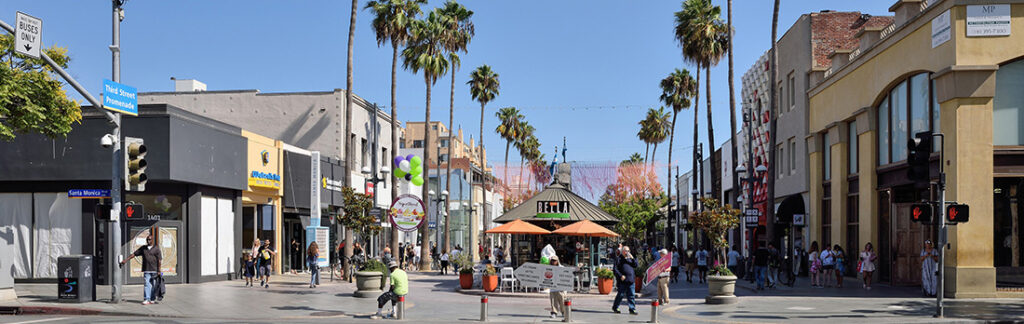
How an independent project tracking Third Street’s shuttered shops caught national attention—and what the data actually reveals about the street’s future.
Guy Schackman didn’t set out to declare Third Street Promenade dead. He just wanted to know which businesses were still alive.
For the past two years, the Santa Monica resident has walked the three-block pedestrian mall, photographing storefronts and tracking what’s opened, what’s closed, and what’s just sitting empty.
At first, his interactive website – ThirdStreetOccupancy.com – lived mostly under the radar, drawing quiet interest from local realtors and business owners. Then, last April, the California Post seized on its data to fuel a sensational “ghost town” story about Santa Monica’s “retail apocalypse.”


But there was one crucial element missing from their reporting: the man behind the map.
“I didn’t end up speaking with them,” Schackman tells The Sun. “My site doesn’t have a political agenda.”
Schackman –– a former product designer for Yahoo! and Disney –– says he prefers to present raw data and leave it open for interpretation.
“If people want to tilt it one way or another, go ahead,” he says. “But for me, it is about creating a factual resource.”
“Is this place still open?”
The project began in 2024 when Schackman noticed a vacancy while walking the outdoor mall with his wife. “Was that store open last time we were here, or did it just close?” they wondered.
Online searches turned up results that were months or even years out of date. So he grabbed a digital camera and headed down the strip documenting every one of the roughly 100 storefronts.
“Things were happening so fast, and as a resident, I had trouble getting a sense of what was actually going on,” he remembers.

What the national headlines missed
Today, Schackman doesn’t dispute that the Promenade faces real economic pain. A vacancy rate hovering around 25% is a stark reality felt by anyone visiting the Apple Store or catching a movie at AMC. But his granular dataset reveals a complex block-by-block shift rather than a uniform collapse:
- The 1200 Block (Wilshire): This is the most challenging stretch, Schackman notes. Long-term vacancies persist, and national anchors are fleeing. Sephora is relocating its operations further south this fall, leaving Foot Locker as virtually the sole remaining national chain on the block.
- The 1300 Block (Arizona): Positioned in the center, this stretch has stayed relatively stable, thanks to new additions like Holey Moley and Barns & Noble. It maintains the lowest vacancy rate along the strip.
- The 1400 Block (Broadway): Capitalizing on foot traffic from the Expo line and Santa Monica Place, major brands are doubling down here —including Raising Cane’s, a new TurboTax experience center, and Sephora’s incoming multi-million-dollar buildout next to Apple and ALO.
The Optical Problem: “Zombie Vacancies”
One of Schackman’s key observations is that the Promenade’s physical appearance often makes the economic situation look worse than the underlying lease data suggests.
He points to “zombie vacancies” — storefronts like the Trick Art Museum that have been dark for months or years but remain full of abandoned fixtures and outdated signage.
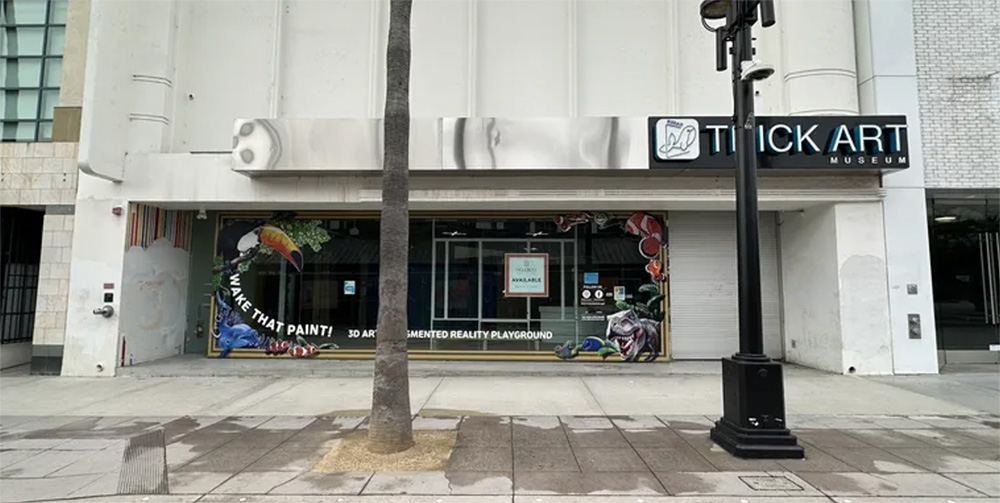
“Landlord management varies drastically,” Schackman noted. “Some landlords put up nice graphics and clean window coverings so the space looks inviting. Others leave peeling paper on the windows and old signs up. It looks derelict, and it’s confusing to consumers.”
Other spaces like Cherokee of California remain locked up despite looking fully stocked and ready for business. Elsewhere, spaces slated for revitalization have stalled completely—such as 1360 3rd Street, where a planned HQ Gastropub showed zero construction progress over 18 months, prompting Schackman to reclassify the address from “Coming Soon” back to “Vacant.”
What the Promenade needs next
As city leaders debate open-container zones and digital billboards to reignite foot traffic, Schackman believes the long-term solution to Third Street’s revitalization lies in reimagining the street’s massive, multi-level retail footprints. Built for traditional apparel anchors, these colossal spaces are ill-suited for modern shopping habits.
Instead of relying solely on standard retail chains, Schackman points to experiential, multi-use venues and restaurants.
“Locals want cool places to go eat and hang out,” he says. “There needs to be more things to do — local food spots, comedy clubs. Something that gives people a reason to come down and stay awhile, rather than just grabbing an item at Uniqlo and leaving.”
For now, Schackman plans to keep walking the three-block stretch every week, maintaining what has quietly become Santa Monica’s most accurate historical archive.
“Not many people are clicking refresh on my site every day, and I don’t expect it to become a massive business,” Schackman said with a laugh. “I just take pride in keeping it accurate. When something changes on the street, I put it up.”

- The true story of Third Street Promenade’s real-time historian - October 1, 2026
- Montana Art Walk introduces open containers, food trucks for 20th anniversary - September 26, 2026
- St. Monica Prep whoops CSHM, eyes Camino Real title - September 26, 2026